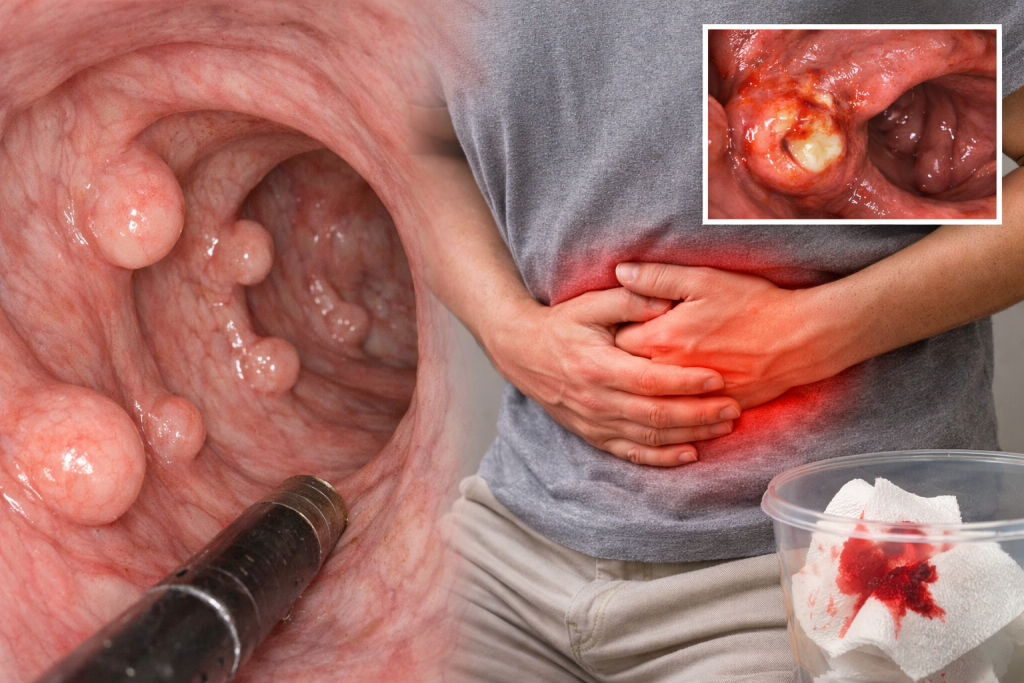
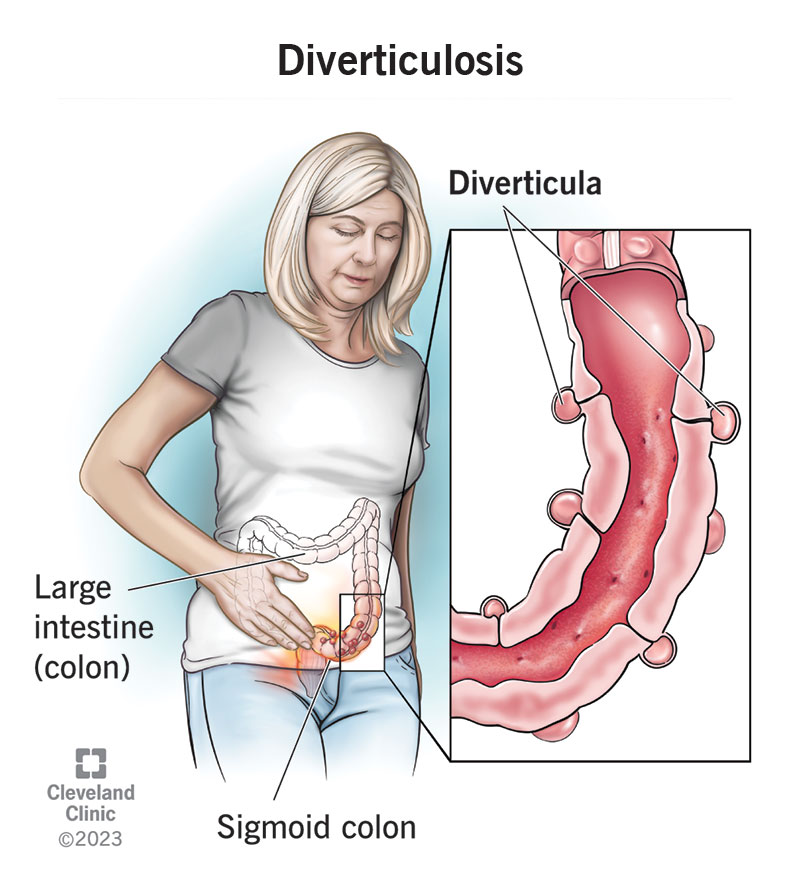
Diverticulosis is a common digestive condition in which small pouches, called diverticula, form in the wall of the large intestine. These pouches develop when the inner lining of the colon pushes outward through weaker areas of the bowel wall. In most cases, they are found in the lower part of the colon, especially the sigmoid colon. Many people have diverticulosis and never know it because it often causes no symptoms at all.
That said, the condition still matters. While diverticulosis itself is often harmless, the pouches can sometimes bleed or become inflamed or infected. When inflammation develops, the condition is called diverticulitis, which is a different and more serious problem. Understanding that distinction helps readers avoid confusion and recognize when a quiet, incidental finding may need closer attention.
What is diverticulosis?
Diverticulosis means you have one or more small bulging pouches in your colon. A single pouch is called a diverticulum. More than one is called diverticula. These pouches tend to form gradually over time as pressure inside the colon pushes against naturally weaker spots in the bowel wall.
The colon is especially prone to this in the sigmoid region, where stool is more concentrated and pressure can be higher. That is one reason diverticula are most often found there rather than evenly throughout the digestive tract.
Diverticulosis vs. diverticulitis
This is the distinction readers most often need clarified.
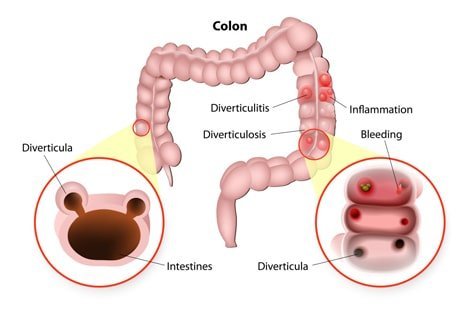
Diverticulosis means the pouches are present.
Diverticulitis means one or more of those pouches have become inflamed, and sometimes infected as well.
That difference matters because diverticulosis usually causes few or no symptoms, while diverticulitis can cause sudden abdominal pain, fever, nausea, and bowel changes. In more severe cases, diverticulitis can lead to abscesses, perforation, fistulas, obstruction, or peritonitis.
In other words, having diverticula is not the same thing as having an active infection or flare-up.
Is diverticulosis serious?
By itself, diverticulosis is usually not considered dangerous. Most people live with it without major issues, and many only learn they have it after a colonoscopy or imaging test done for another reason.
However, it can become more important clinically if it leads to complications such as:
- Diverticular bleeding
- Chronic digestive symptoms in some people
- Diverticulitis
- Rarely, serious consequences if infection or bleeding is not treated appropriately
So the better way to frame it is this: diverticulosis is often mild, but it should not be confused with “never important.”
How common is diverticulosis?
Diverticulosis becomes much more common with age. Mayo Clinic notes that diverticula are common after age 50, while Cleveland Clinic describes the condition as especially common in older adults. NIDDK also confirms that many people with diverticulosis have no symptoms and may only discover it incidentally.
Older reference figures from Cleveland Clinic reported that in the U.S., diverticulosis affects around 30% of people over 50, 50% over 60, and up to 75% over 80. Those figures are widely cited, but readers should understand they are approximate epidemiologic estimates rather than a fixed rule for every population.
What causes diverticulosis?
There is not one single cause. Diverticulosis is generally thought to develop over time from a mix of structural weakness in the colon wall and pressure within the colon. Age is one of the strongest contributors because tissues naturally change over time.
Researchers also look at lifestyle and diet patterns. NIDDK notes that diet may play a role in diverticular disease, and current guidance suggests that eating patterns lower in fiber and higher in red meat may increase the risk of diverticulitis. High-fiber eating patterns are often recommended to support bowel regularity and may help lower future risk.
Does diverticulosis cause symptoms?
Most of the time, no. Diverticulosis often causes no noticeable symptoms. That is one reason it is frequently found during testing done for another reason.
Still, some people with diverticular disease report ongoing symptoms such as:
- Bloating
- Cramping
- Lower abdominal discomfort
- Constipation or diarrhea
These symptoms are not specific to diverticulosis alone and can overlap with conditions such as irritable bowel syndrome, which is why self-diagnosis is unreliable.
How do doctors find it?
Doctors may diagnose diverticulosis after reviewing symptoms, medical history, and exam findings, but many cases are discovered incidentally during a colonoscopy, imaging study, or other evaluation of the colon.
If a person has pouches in the colon wall without symptoms linked to them, the diagnosis may simply be diverticulosis rather than active diverticular disease.
When should someone worry?
Medical attention becomes more important if symptoms suggest complications rather than uncomplicated diverticulosis. Warning signs include:
- New or worsening abdominal pain
- Fever
- Nausea or vomiting
- Marked change in bowel habits
- Rectal bleeding
- Weakness, dizziness, or signs of significant blood loss
These symptoms may point to diverticulitis, bleeding, or another bowel problem that needs prompt evaluation.
How is it managed?
If diverticulosis is found incidentally and there are no symptoms, treatment may be minimal. In many cases, management focuses on long-term digestive health rather than aggressive intervention. NIDDK and Cleveland Clinic both support dietary strategies that improve stool consistency and bowel regularity, especially through adequate fiber intake when appropriate.
General lifestyle advice often includes:
- Eating more fiber from foods when tolerated
- Drinking enough fluids
- Staying physically active
- Avoiding chronic constipation when possible
Importantly, advice can differ during an active diverticulitis flare versus routine prevention. A low-fiber approach may be used short-term during a flare, while a higher-fiber pattern is often recommended afterward for long-term prevention.
The takeaway
Diverticulosis is the presence of small pouches in the colon wall, most often in the sigmoid colon. It is common, especially with aging, and usually does not cause symptoms or serious problems on its own. But it can become medically significant if those pouches bleed or become inflamed, which is when the conversation shifts from diverticulosis to diverticulitis.
For readers, the most useful message is simple: diverticulosis is often manageable and uneventful, but persistent abdominal symptoms, fever, or rectal bleeding should never be ignored.